
I want to do a post about pollution and environmental damage.
Alright, I just heard about half the room get up and leave and the other half groan.
I know, this isn’t a popular subject, but hell, I thought I’d start this blog off with a bang. This is who I am, I don’t shy away from uncomfortable topics, and I might as well be true to form. Everyone pussyfoots around too many of the things that we all think about constantly. It’s kind of like when you have a relationship that you know is completely dysfunctional but it somehow works enough that you get most of what you need so you’re relatively comfortable. You don’t want to fuck with it because against all odds it seems to kind of be working. So, you don’t need to talk about that crazy shit they did last year at Christmas, it’s not important and aunt Susan has forgotten all about it by now.
Sorry, but we need to talk about the whole environmental thing. We need to hash out these skeletons in our closet. The mess we’ve made is something that fucks with each and every person born within our lifetime.
Society as a whole has been worrying about the damage we are doing to the Earth since the industrial age and honestly I don’t think we were really, truly worried until after WWII. Do you know how relatively new, and terribly constant and stressful that concept is? Of course you know the last two, but honestly, think about the first. For 200,000 years humans just focused on how to tame the Earth. More often than not we got our asses kicked by mother nature, but then in the last few thousand years we started to gain an impressive foothold. As soon as that foothold grew too big though, the flipside.
We’ve conquered this planet, but we could destroy it.
In fact, every day that we live with many of our modern conveniences we are complicit to the damage being done to our world. Our very existence is ruining our world, and we have to live each and every day knowing that. It’s balls. It’s like original sin in Christianity, but for a new age. The original sin of technology. Humans, you’re guilty just for existing, version 2.0. I wonder though, does it have to be this way, and should we feel guilty for something that we are indoctrinated into?
We should maybe feel a little guilty, but only if that guilt primes us for some action. Currently, the constant feeling of innate guilt seems to largely be causing people to simply do nothing. I can understand this, I think the issue feels too big for the average person, and although they know they are part of the problem they feel like the current situation just kind of happened without their consent. It’s a feeling of powerlessness. We’ve been rolled up into this big machine and aside from going Amish or totally granola we don’t see many solutions. Well, sorry to say but simply not participating in the big machine may no longer be an option to reverse this.
Scientists have pretty nearly unanimously agreed that we have gone too far to go back now. We are headed for a mass extinction event and we can’t really roll back the damage by simply changing our behaviours, as if we were going to all do that tomorrow anyways. We’re past the tipping point as they say.
“But, Ben!” I hear at least one of you who stayed saying, “You’re just assuming that climate change is real. What if it’s all fake?”
Well, I really like that comic by Joel Pett about that, I’ll try to link it to this post. It’s the one where the guy is standing up at a climate change conference, and he asks, “What if it’s all a big hoax and we create a better world for nothing?”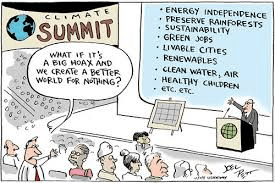
Exactly. But, it isn’t a hoax, and it’s not just climate change.
I’m not going to try to justify the point of view that we have caused and continue to cause damage to the planet. There’s climate change and the effect of greenhouse gasses, the effects of all the plastic we are dumping into our oceans and anywhere we can, and of course the constant extinctions that we trigger knowingly or inadvertently most often with apex predators or other high ranking members of the food chain. That’s to say nothing of all the arable soil we have lost to erosion due to our poor logging practices, the acidification of our oceans, the rise of superbugs due to our careless use of antibiotics, and of course the corruption and contamination of our water supply due to fracking and other activities. These are only some of the ways we’ve fucked the environment, and these alone are very real threats, they are happening, but they haven’t yet impacted industry or our quality of life in a significant enough way to prompt some of the radical solutions that I am about to suggest.
Because ladies and gentlemen, I think there are some solutions, and those solutions do not mean that the government has to incessantly raise our taxes on the cost of living and then not spend that fucking money on any solutions. Some of the things I’m about to suggest subvert conventional wisdom, and honestly, most conversations on the matter fail to take these possibilities into account. We’ve gotten ourselves into a bit of a mess, but I think we’re going to get out of it.
Anyone who is watching our trajectory is right to have high blood pressure. It looks bad, but if you were to tell someone that a squishy little pink being that can’t survive for a minute in the vacuum of space was going to make it all the way from the Earth to the Earth’s Moon, well they might be skeptical of that too. That’s right, these little hominids can do great things when they set their minds to a task. Things can and most likely will get better, but not in the let’s all eat kale and drive to work on sunbeams and cross our fingers that mother nature will wash away our sins kinda way. No, I think that doom and gloom viewpoints of the future don’t take into account how ambitious humans are and how little they like having their progress halted. I also think most optimistic or pro-Earth viewpoints often ignore the reality of how humans actually live their lives.
The truth of the matter is that we have fucked up our environment considerably. It isn’t just a single pronged issue, like climate change, there’s a lot going on. The good news is that humans are resourceful and I think that there are solutions for each and every issue we face.
So, here is finally the fun part of this blog post for me, where I get to go off a bit about how I think we can reverse the damage that we’ve done, Everything so far was just a big setup so I could start delving into these potential fixes.
So, let’s start with climate change and the whole greenhouse gas issue.
Eventually, I do think that we will slow our emissions down and reduce them to pretty near zero. This will be done as we continue to develop renewables, ultimately I think solar power will play the biggest role here. The price of solar panels has decreased dramatically in the last decade, although efficiency hasn’t made too many leaps and bounds since the 60s and 70s. Currently, most silicon solar panels have over 20% efficiency, ~24% or so, although theoretically they should be able to get to 29%. This means that from the light that hits them they convert 24% or so of the energy to electricity. The rest of the energy is dissipated as heat. So, there’s room for improvement here, and as the technology continues to be invested in and the per unit price goes down, I think we will see solar become the major player on the world energy scene. This is to say nothing of tidal or wind setups which also have immense potential to contribute to the changing energy landscape. It essentially comes down to an infrastructure issue coupled with an energy storage issue. As we develop the infrastructure (both renewable sources and batteries) we will see a phasing out of the use of coal and gases to generate power, we will also see more electrical vehicles. I am confident that within two decades we will nearly see the extinction of the internal combustion engine. The cars that have them will mostly be collector’s vehicles. This is to say nothing of the very real possibility of harnessing nuclear power in a safe, cheap, and very effective manner which would also be a complete game-changer if our world could get over our aversion and stigmatization of that power source. I think this last one will be a difficult hurdle to jump because many people think Chernobyl when they think nuclear, but let’s be honest, not everyone runs a power plant like the soviets did.
Unfortunately, we will still have large amounts of ambient CO2, so to compensate for this I think we will need to pull CO2 out of the atmosphere. There are a few ways we could do this. One, and the most natural way, is plants and other photosynthesizers. All around us there are organisms that naturally balance the CO2:Oxygen ratio. It’s actually interesting that some plant life is thriving under the new amped up CO2 levels. In the Amazon they say that increased CO2 has triggered a massive blooming of flowers. Increased CO2=Increased Sugars for the Plants=Increased reproduction. But, I digress.
Nature could potentially correct this damage alone, but not on a short enough timeline for it to work for us short-lived humans. As the old adage goes, the Earth will be fine, it’s us who will be fucked. People will need to balance this equation since we threw it out of whack in the first place. Again, I want you to consider the implications on industry when it comes to the effects of runaway global warming. There will come a time when there will be investment in reversing these effects because of the negative impacts they have on profitability.
Honestly, this is the sort of thing a population should demand. We should be requiring large companies that are polluters to pay for the development of a certain level of photosynthesizers, which is essentially how carbon credits work but I think that we need to step it up a bit. As it is that entire system is deeply flawed. You pay to preserve an area that is already in full swing when really what we need is preservation, but also the addition of more capacity for CO2 removal. Don’t just keep and protect what we have, increase the amount overall. It seems pretty simple. And before some of you go, “but what about logging?” or something of the like, of course I think we can continue with this industry, but with sustainable practices that involve reforestation of the areas we harvest. Lumber is a cheap and readily available resource, but most importantly, it is completely renewable.
What I think is bullshit about the whole system we have now is that you can pay someone a carbon credit to keep land that is already forest. I think the investment should be in creating new photosynthesizers, it shouldn’t count towards something that’s pre-existing. If we cut down forest, we should be replanting an equivalent or what will be an equivalent offset amount. If we pollute, we should have to plant a new offset amount.
By now, everyone has seen the design of buildings that grow gardens around the outside of them. I will try to link a pic to the article, but this is one way we could integrate urban development and a growing human population with environmental responsibility and stewardship.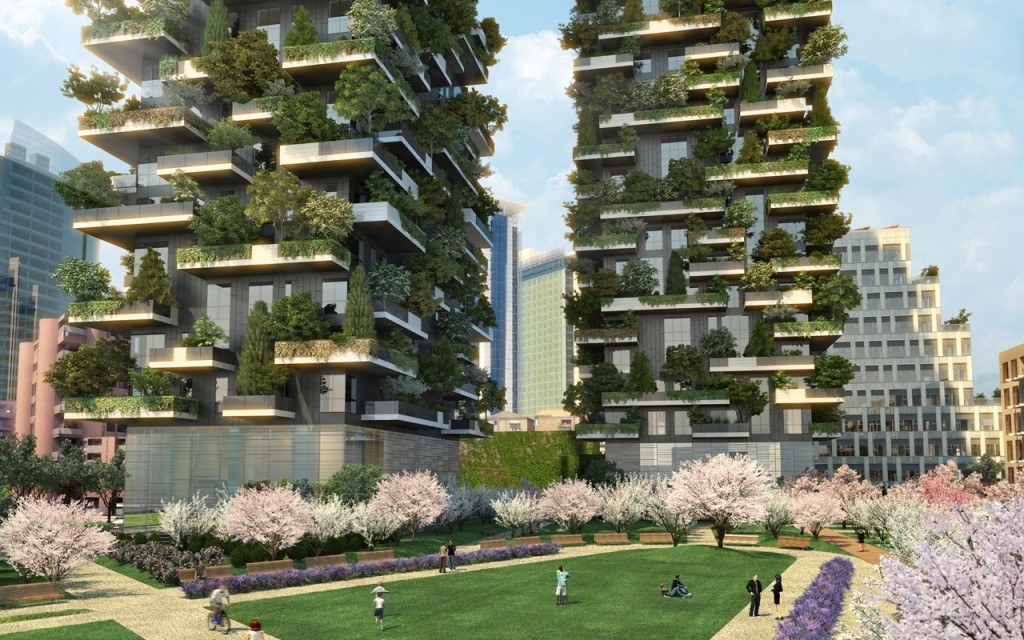
I’ve had this idea for a cyanobacteria that is a GMO and during the day photosynthesizes but at night is bioluminescent. In this way we could kill two birds with one stone. The lights wouldn’t require electricity, thus reducing emissions that way by reducing the need for energy, and on the flipside they would pull CO2 from the air during the day. Such “cells”, filled with these little guys, could replace streetlights as we know them, This capacity, if adapted could be used in plants, making certain trees or bushes lights, and again reducing the need for electricity while simultaneously making our world look like something out of a sci-fi novel. It’s your classic win-win.
Other solutions for this issue could be implemented too. I have often thought that some sort of mechanical process to filter the air will be integrated in time. In my opinion, an ideal and brilliant design would be one that filters the carbon from the air but sets that carbon into a crystal lattice structure. That’s right, cleans the air while producing diamonds. Don’t tell me it can’t be done, we just haven’t figured it out yet. The benefits of this approach seem almost self-evident, it wouldn’t require outside funding because the production of diamonds would ideally produce the funding required so in this case you wouldn’t be as dependent on offsets. Maybe in a world with such diamonds though the cost wouldn’t be so high, or maybe people wouldn’t want these diamonds as already the lab grown diamonds we do have seem to be priced more cheaply and less desired than those that are mined. People just don’t see the same value in the gems unless there’s some sort of environmental damage and child labour associated with it. I digress.
There are other issues with emissions, methane from cattle for instance. But, I think that this issue will eventually be offset when we figure out how to grow meat in the lab. Already scientists are getting close to this with GMO bacteria, and it won’t be long until you can get a lab-certified steak or burger at your local establishment. I know, to some people this sounds like a dystopian sci-fi, but stick with me on this one. There is nothing to say that a protein that is the exact same protein as you would get in a cow is any better or worse for you if it is made by the cow’s cells or if it is made by a bacterial cell that has been given the fragment of DNA that codes for that protein. There is no link whatsoever between GMOs and cancer. Repeat after me. No link between GMOs and cancer. Alcohol and cancer yes, GMOs no. People trust convention more than innovation even if the proof overwhelmingly points to the fact that convention causes more harm than the innovation. I know people who are afraid of GMOs but drink alcohol no problem. This is funny to me, it’s akin to the view that everything natural is good, well there are some very poisonous plants out there, those are all natural. Scorpion venom is technically natural, but it’ll fuck you up.
Enough of my tirade about GMOs, that’s it’s own bloody post. Let’s move on to the plastic issue.
So, we all know that we’ve been making different plastics for a good hundred years or so. We also know that these plastics don’t break down or biodegrade in the conventional sense and can take hundreds of years to break down. Now, the major dangers with plastics are mechanical and chemical. As larger pieces they can really mess up any animals that get tangled in them or ingest them, but this is really just the tip of the iceberg. It’s the microplastics and the chemical effects of this pollution that are the most dangerous. You see, although it takes hundreds of years for some plastics to degrade, in the meantime they leech off damaging chemicals. One of these guys was all the rage a few years ago now, everyone was afraid that their drinking bottles and such had it and were leeching it into their systems, and rightfully so, many bottles did have it at the time. I’m talking of course about BPA, bisphenol A. This is just one potential pollutant that leaks out of decomposing plastics, and many of them are known to cause physiological issues to the animals in the environments around them, i.e. cancer or reproductive issues. So, this potentially posses an enormous threat to us and other terrestrial animals because these pollutants on land and in landfills get into our groundwater, not to mention the potential toxic stew that it may in time turn our oceans into.
Some estimates say that by 2050 there will be more plastic than fish in our oceans by mass. That’s messed up and hardly sustainable.
So what do we do with the plastic issue? Obviously the old three Rs have served us mediocrely. Definitely anytime we can mitigate the impact of our plastics by preventing them from turning into waste, that is ideal. But, what if we had another way of cleansing our oceans from all this debris?
Scientists have recently discovered a bacteria that can eat plastic. While this currently is not a ready-made solution, I think that it could be part of a workable plan of plastic reclamation and breakdown. From what I’ve read, microbiologists have already done some work on the cells to ramp up the rate at which they break down the long polymer chains of plastics. To my mind, the most clever way to proceed now would be to design some sort of filtering plant where a volume of water is taken in and the bacteria introduced to breakdown any plastics. You would want to be careful about seeding the planet with too much of this bacteria as if it were too opportunistic this may in turn lead to the breakdown of plastics we don’t intend to have broken down. By perhaps using currents and filtering out the plastics in the ocean and then breaking them down within controlled environments, we could rapidly lessen the total plastic content within the ocean.
The last thing I want to touch on in this rant is the extinction of species and this is very connected to climate change and the plastic issue. Aside from those factors though, our general encroaching on habitats as well as poaching and illegal trade in endangered species really drives this issue. Scientists say we are heading for a mass extinction, and it really is too late to save all the creatures.
Well, luckily, through the wonders of genetics, we may have a solution.
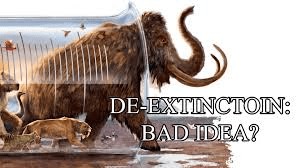
When it comes to restoring species that have died out naturally, I think that we should tread lightly with this technology. We’ve all seen Jurassic Park. However, when it comes to the future of repairing food webs and ecosystems, something we’re going to have to do down the road, I think this tech is perfect.
It’s been over 20 years since we cloned Dolly. I don’t see why we’re dragging our heels on the White Rhinos and Siberian Tigers of the world. This is one of those areas where again I think we don’t tread because we haven’t yet committed to the next step. We have fucked this world up, but oh no to use our technology now to fix it, that would be playing God. I say posh and flimshaw. To begin seeding the world again with new animals now may be getting the cart in front of the horse, we have some other repair work to do, but when we are done fixing the atmosphere and removing all of our plastic, we need to reintroduce new populations of the animals that have been displaced.
You see, to my mind, Earth is going to be our testing grounds. We’ve messed up our environment to the point where it is no longer ideal for life, the good news is we have another planet nearby that soon we need to make livable. We can cut our teeth on our home world, fixing and tweaking, and then take those principles and apply them on our moon and our red neighbour. I know, maybe I’m crazy, but to my mind these things seem entirely possible and not that far off.
The most important thing is that something does need to be done, and the time for passivity and promising to reduce our footprint has passed. The ounce of prevention would have been nice, it’s definitely preferable, but with where we’re at now, we need a pound of cure.
 Bloody Well Write